Tiny House Floor Plan Ideas: Maximize Every Square Foot
Tiny houses require smart space planning. Here are practical floor plan ideas to maximize every square foot: open layouts, lofted areas, smart storage, and multi-use rooms.
Tiny houses are growing in popularity for their efficiency, sustainability, and affordability. But designing a functional tiny home requires careful space planning. Every square foot matters, and the right floor plan layout can make the difference between a home that feels cramped and one that feels open and comfortable.
This guide covers practical floor plan ideas for tiny houses and small spaces, from open-concept layouts to smart storage solutions.
Tiny House Layout Ideas at a Glance
| Layout strategy | What it does | Best for |
|---|---|---|
| Open-concept | Removes walls between kitchen, living, dining | Making the space feel larger and brighter |
| Lofted sleeping area | Places the bedroom above the living space | Freeing up ground floor square footage |
| Galley kitchen | Linear layout with floor-to-ceiling storage | Maximizing kitchen function in narrow spaces |
| Multi-use rooms | Furniture that converts (Murphy bed, fold-down table) | Homes under 30 m² where every room serves double duty |
| Vertical storage | Wall shelves, under-floor compartments, built-in units | Keeping the home organized without wasting floor space |
| Indoor-outdoor flow | Sliding doors, deck, covered patio | Extending usable living area beyond the walls |
Open-Concept Layouts
Removing unnecessary walls is one of the most effective ways to make a tiny house feel spacious. An open-concept layout combines kitchen, living, and dining into a single flowing area.
To define zones without building walls, use rugs, lighting changes, or different flooring textures. Large windows and glass doors bring in natural light and visually extend the space.
This approach works best for tiny homes with a single floor where the main living area needs to serve multiple functions. For a sense of how it works in a small footprint, see this simple one-bedroom apartment for small spaces.
Lofted Sleeping Areas
In homes with limited floor space, vertical space is the biggest opportunity. A lofted bedroom placed above the living room or workspace creates a separate sleeping zone without using ground-level square footage. This compact loft house with a mezzanine bedroom shows the idea in a finished 3D design.
Access options include ladders (most compact), alternating-tread stairs, or staircases with built-in storage drawers. Split-level designs can further define different zones within a small footprint.
Before committing to a lofted layout, testing it in floor plan software helps you check ceiling heights, access angles, and how the space feels in 3D.
Efficient Kitchen and Bathroom Layouts
Kitchens and bathrooms need the most careful planning in tiny homes because they combine fixed plumbing, appliances, and daily-use items in minimal space.
Kitchen tips:
- Galley layouts (two parallel counters) maximize workspace in narrow rooms.
- Floor-to-ceiling cabinetry uses every vertical inch.
- Pull-out pantry drawers and wall-mounted foldable countertops add function without permanent footprint.
Bathroom tips:
- Corner sinks and wall-mounted toilets save floor space.
- Sliding barn doors or pocket doors eliminate swing clearance.
- Wet-room designs (no separate shower enclosure) work well in very small bathrooms.
Multi-Use and Convertible Spaces
In a tiny home, each room should serve at least two purposes. A living room that becomes a bedroom at night. A kitchen island that doubles as a workspace. A dining table that folds into the wall when not in use.
Smart furniture makes this possible:
- Murphy beds: fold up against the wall during the day.
- Fold-down desks: create a workspace that disappears after hours.
- Convertible sofas: provide seating and sleeping in one piece.
- Nesting tables: stack together when not needed.
Smart Storage Solutions
Storage is the biggest challenge in small-space living. The goal is to store everything the household needs without cluttering visible living areas.
Effective strategies:
- Built-in shelving: uses wall space that would otherwise be wasted.
- Under-floor storage: raised platforms with drawers underneath.
- Stair storage: each step doubles as a drawer or cabinet.
- Hidden compartments: furniture with storage inside (ottomans, bed frames, benches).
- Wall-mounted organizers: hooks, magnetic strips, and pegboards keep items off surfaces.
Indoor-Outdoor Integration
Extending living space beyond the walls makes a tiny home feel significantly larger. Large sliding doors, folding glass walls, or a covered patio create a fluid transition between inside and outside.
A deck or patio can function as an outdoor dining room, living area, or workspace in good weather. Even a small garden or green area adds to the sense of space.
Plan Your Tiny House with Space Designer 3D
Space Designer 3D is a browser-based floor plan tool used by over 6 million people since 2010. It's designed to draw the way you sketch on paper: trace walls freely, move them, test layouts without constraints. Measurements are calculated as you go. Try it on a real example like this compact one-bedroom apartment for small spaces.
For tiny house planning specifically:
- Test different furniture arrangements in real dimensions before buying anything.
- Switch between 2D plan view and 3D walkthrough to check how the space feels.
- Simulate natural light based on your real address to optimize window placement.
- Export floor plans in PDF or DXF for builders and permit applications.
No download required. Start with a 5-day free trial. Highly rated on Trustpilot.
Frequently Asked Questions
What Is the Best Floor Plan Layout for a Tiny House?
Open-concept layouts work best for most tiny homes because they eliminate wasted hallway and wall space. Combine this with a lofted sleeping area to maximize ground-floor living space. The ideal layout depends on your specific needs, which is why testing different configurations in floor plan software before building is essential.
How Small Can a Tiny House Be and Still Be Comfortable?
Most comfortable tiny homes range from 15 to 40 square meters. Below 15 m², every centimeter needs to serve a purpose. Smart furniture (Murphy beds, fold-down tables) and vertical storage make smaller footprints livable. The key is not the total area but how well the space is planned.
How Do I Maximize Storage in a Tiny House?
Use every dimension: walls (shelving, hooks, pegboards), floors (raised platforms with drawers), stairs (storage steps), and furniture (ottomans, bed frames, benches with hidden compartments). Plan storage into the floor plan from the start rather than adding it after construction.
Can I Design a Tiny House Floor Plan Online?
Yes. Space Designer 3D lets you draw your tiny house floor plan in your browser, place furniture from a catalog of 5,000+ real-sized items, and see the result in real-time 3D. You can test lofted areas, kitchen layouts, and storage solutions before committing to construction. No download needed. 5-day free trial available.
What Are the Best Space-Saving Furniture Ideas for Tiny Homes?
Murphy beds (wall beds), fold-down desks, convertible sofas, nesting tables, and kitchen islands with built-in storage are the most effective space-saving solutions. The key is furniture that serves multiple purposes and can be stored or folded when not in active use.
How Do I Make a Tiny House Feel Bigger?
Open layouts, large windows, light-colored walls, and mirrors all help. Reducing visual clutter through hidden storage and clean surfaces makes the biggest difference. Indoor-outdoor integration (sliding doors to a deck or patio) extends the perceived living area significantly.
More from the Blog
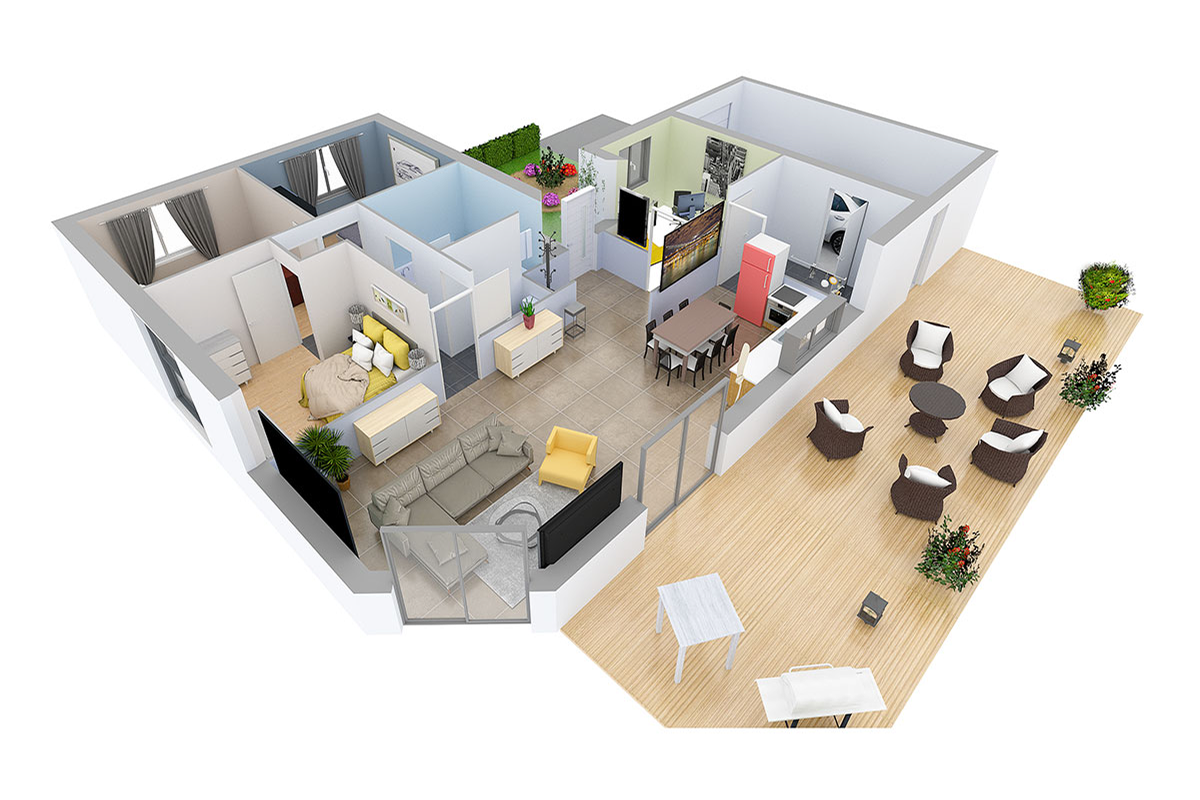
Space Designer 3D Turns 16: A Look Back at Its 5 Versions
In May 2026, Space Designer 3D turns 16. A look back at how the platform evolved, from the first room ever drawn in a web browser in 2010 to today's multi-device, AI-augmented edition.
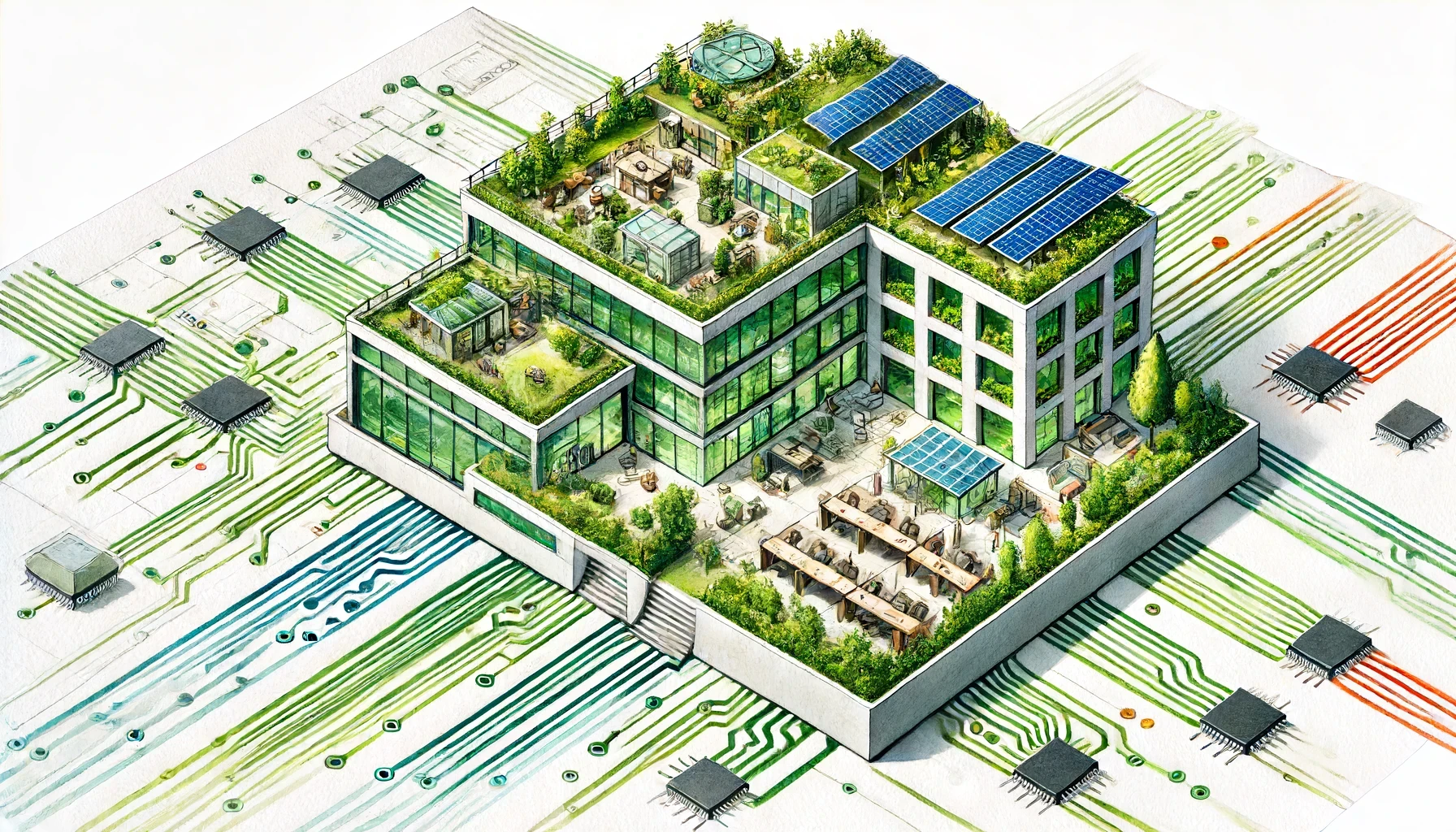
AI-Powered Workspace Design: Smarter Office Layouts
AI is changing how offices are designed and managed. Here is a practical look at the tools and methods reshaping workspace planning, and how to test layouts before committing to them.
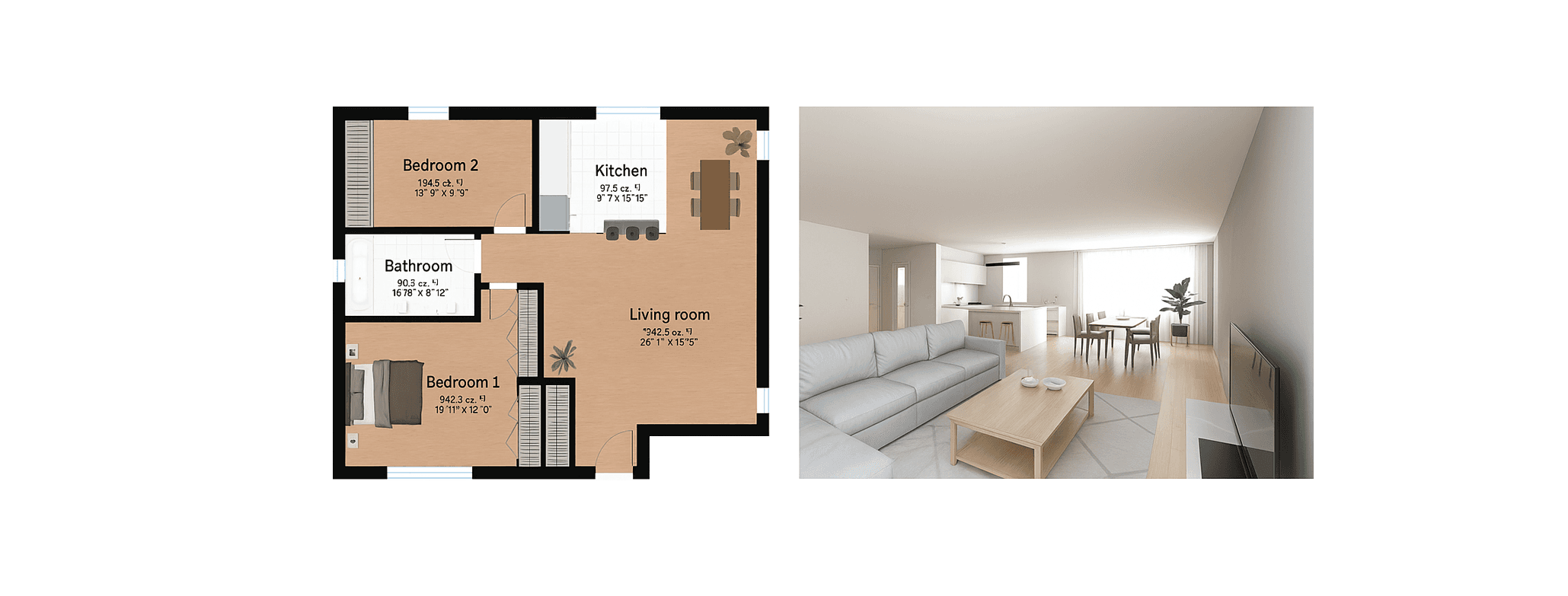
Best Floor Plan Software in 2026: 7 Tools Compared
Looking for the best online floor plan software? We compared 7 tools side by side: features, pricing, 3D quality, and ease of use. Find the right one for your project.
Design Your Floor Plan in 3D
Join 6M+ users. Draw floor plans, furnish rooms, and visualize them in 3D directly in your browser.